What Omega-3 Fatty Acids Are
Omega-3s are a family of polyunsaturated fats considered essential, meaning the body cannot produce them on its own and they must come from the diet. There are three main types: ALA (alpha-linolenic acid), found mainly in plant sources like flaxseed and walnuts, and EPA and DHA, found mainly in fish and marine sources. The body can convert some ALA into EPA and DHA, but this conversion is generally understood to be inefficient, which is why fish and fish oil are often highlighted as more direct sources of EPA and DHA specifically.
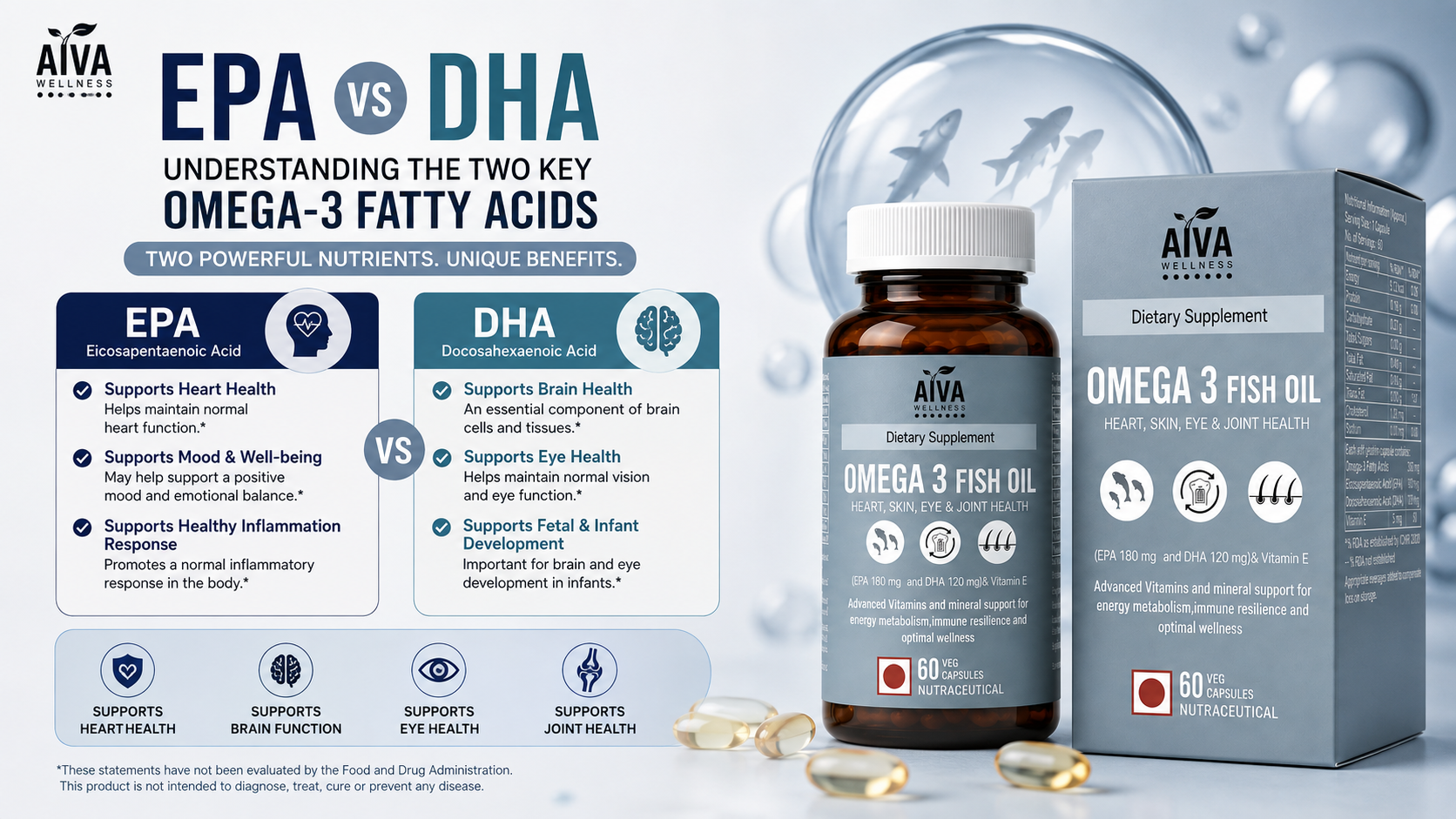
EPA vs DHA: The General Difference
EPA (Eicosapentaenoic Acid) and DHA (Docosahexaenoic Acid) are structurally similar but are generally discussed in slightly different contexts:
- EPA is commonly discussed in relation to cardiovascular wellness and the body's normal inflammatory response processes.
- DHA is a major structural component of the brain and retina, and is commonly discussed in relation to normal brain and eye function.
In practice, most fish and fish oil supplements provide both EPA and DHA together, since they occur alongside each other in marine sources, and research on omega-3s often looks at their combined effect rather than isolating one or the other.
Food Sources of EPA and DHA
The richest natural sources of EPA and DHA are oily, cold-water fish, including:
- Salmon
- Mackerel
- Sardines
- Herring and anchovies
For people who don't regularly eat these fish — a common scenario in many diets — a fish oil supplement is one way to help meet EPA and DHA intake.
Reading EPA/DHA on a Supplement Label
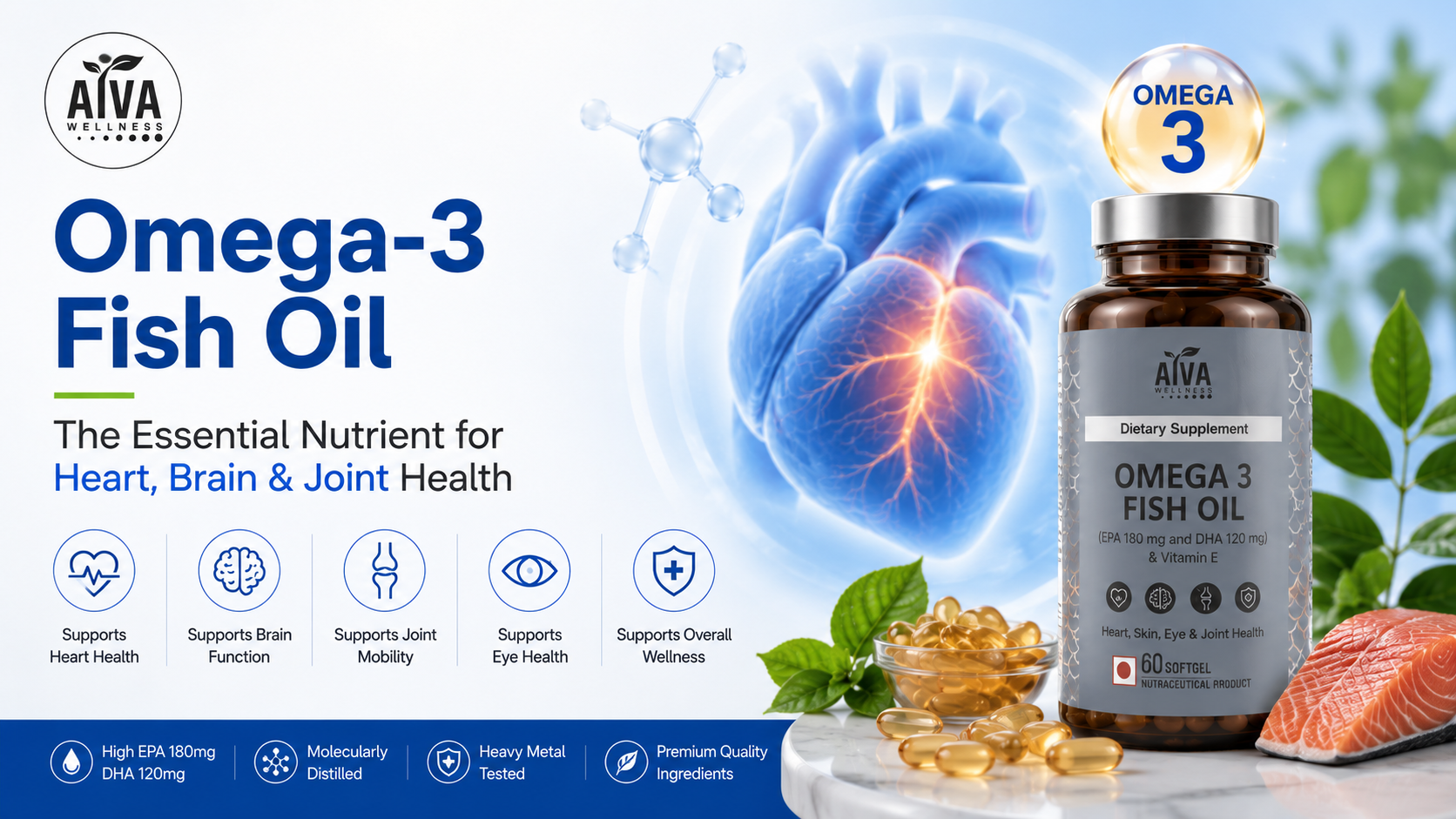
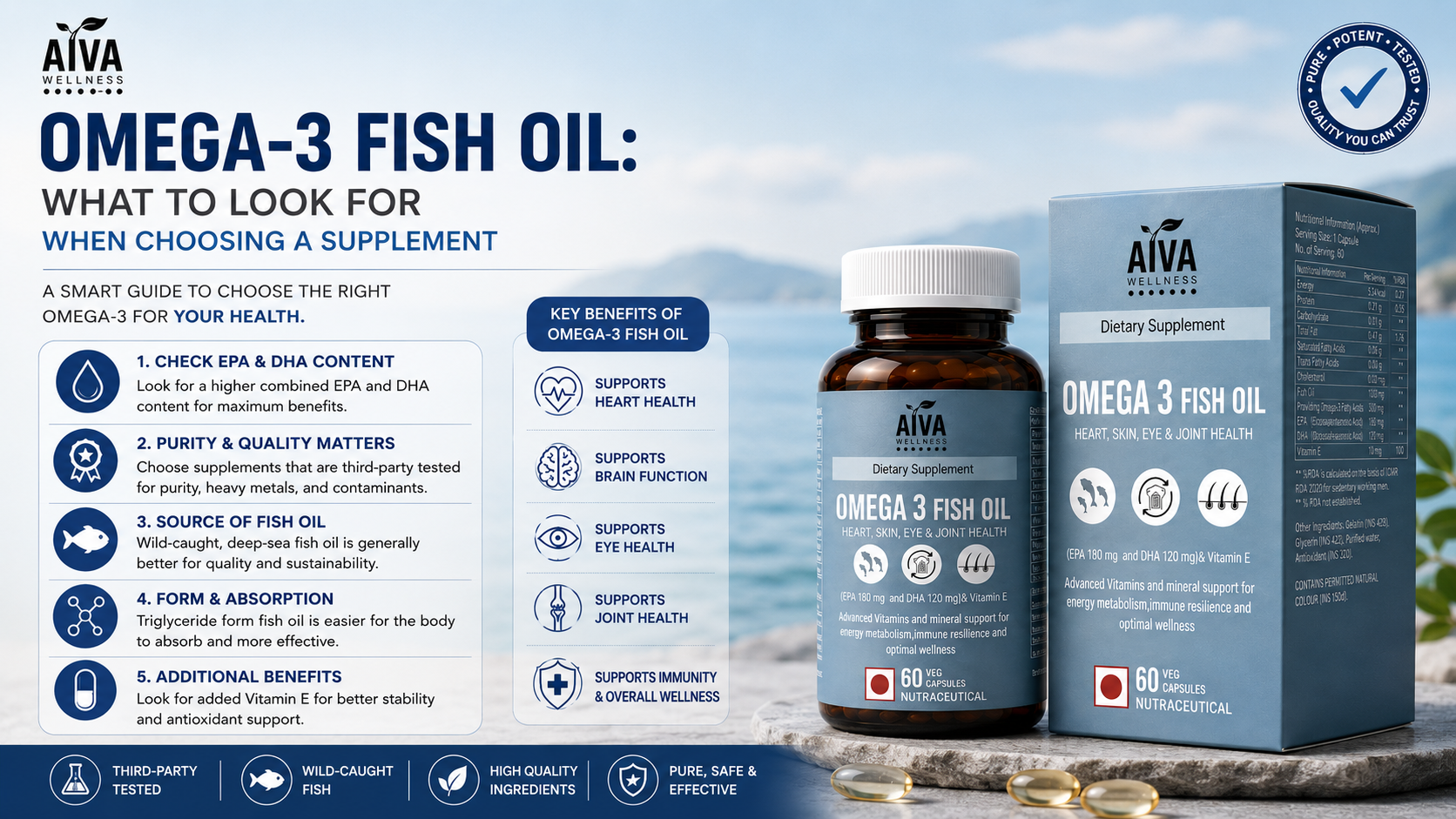
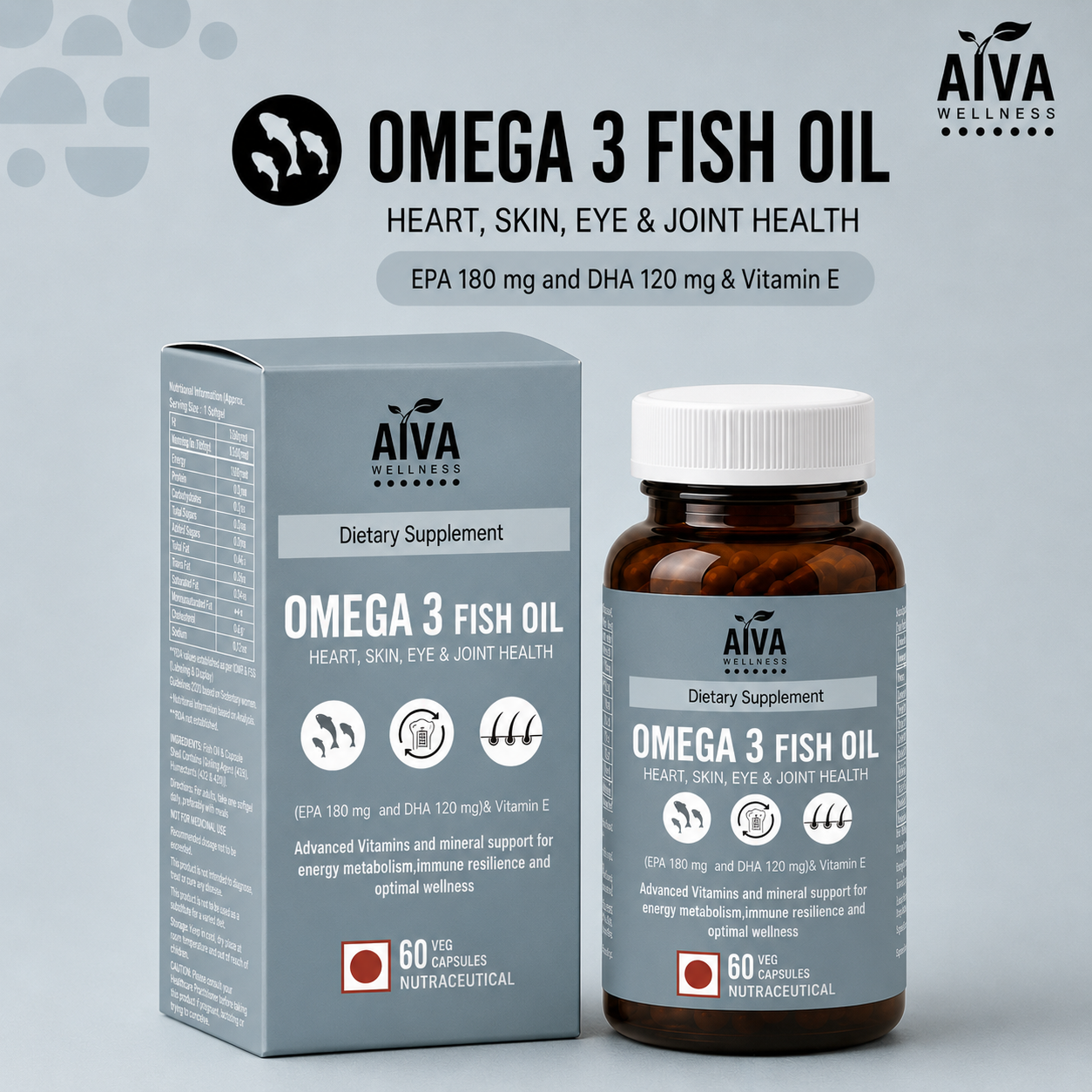
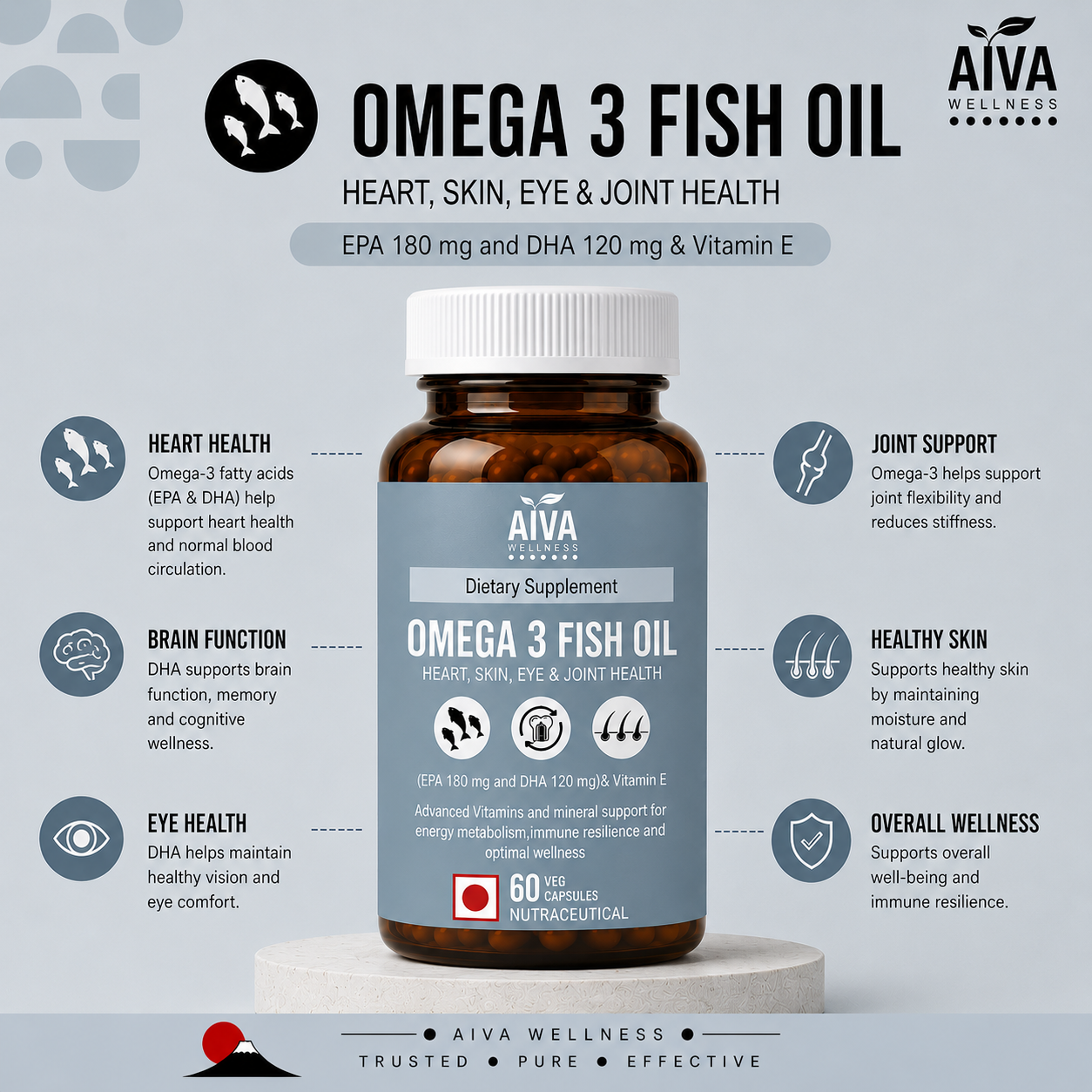
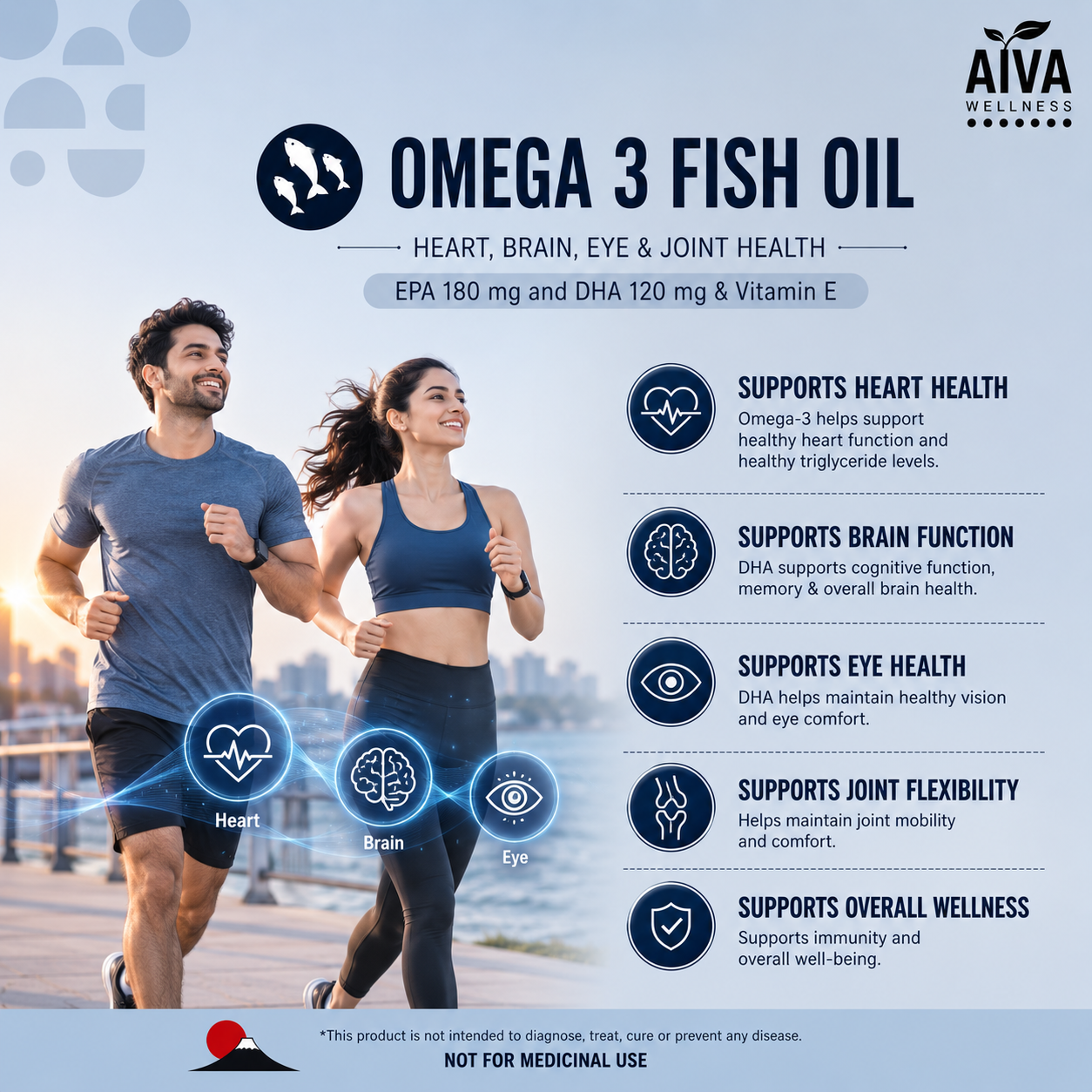
When comparing fish oil products, it helps to look past the total "fish oil" or "omega-3" weight and check the specific EPA and DHA amounts, since these are the actual active components. According to the Aiva Wellness Omega 3 Fish Oil product specification, each capsule provides Omega 3 Fatty Acid 1000 mg, including EPA (Eicosapentaenoic Acid) 180 mg and DHA (Docosahexaenoic Acid) 120 mg, along with Vitamin E 10 mg.
This article is for general educational purposes and is not medical advice. This product is not intended to diagnose, treat, cure, or prevent any disease. Please consult your healthcare practitioner before use if you are pregnant, lactating, on blood-thinning medication, or managing an existing health condition.
Why EPA and DHA Are Usually Paired
Since EPA and DHA occur together in fish and are both considered important long-chain omega-3s, most supplements — including the Aiva Wellness formula — provide them together rather than in isolation. If you're specifically weighing what else to look for on a fish oil label beyond EPA and DHA, our companion article on choosing an omega-3 fish oil supplement covers serving size, sourcing, and storage considerations.
Frequently Asked Questions
Both are considered important long-chain omega-3 fatty acids and are generally discussed in slightly different contexts — EPA with cardiovascular wellness, DHA with brain and eye function. Most supplements provide both together.
The body can convert some plant-based ALA into EPA and DHA, but this conversion is generally understood to be inefficient, which is why fish and fish oil are often highlighted as more direct sources.
According to the product label, each capsule provides 1000 mg of Omega 3 Fatty Acid, including 180 mg of EPA and 120 mg of DHA, along with 10 mg of Vitamin E.
Oily, cold-water fish such as salmon, mackerel, sardines, and herring are the richest natural sources of EPA and DHA.
The Takeaway
EPA and DHA are both essential long-chain omega-3 fatty acids, with EPA more often discussed alongside cardiovascular wellness and DHA alongside brain and eye function. Most fish oil supplements, including Aiva Wellness Omega 3 Fish Oil, provide both together.
Referenced Research & Sources
- National Institutes of Health, Office of Dietary Supplements — Omega-3 Fatty Acids Fact Sheet
- Aiva Wellness — Omega 3 Fish Oil product specification sheet
- ICMR (Indian Council of Medical Research) — Nutrient Requirements and RDA for Indians, 2020