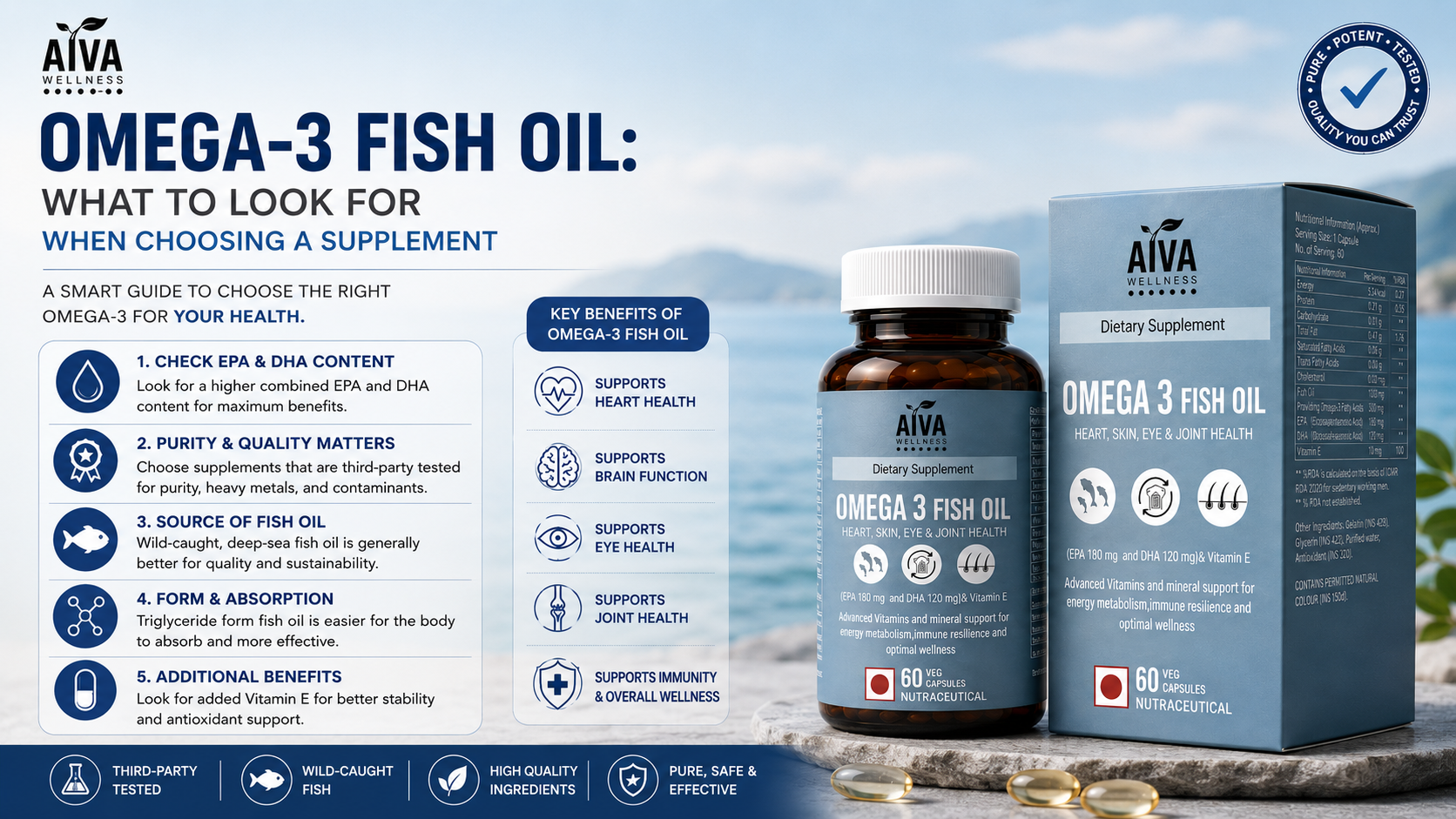
Check the EPA and DHA Content
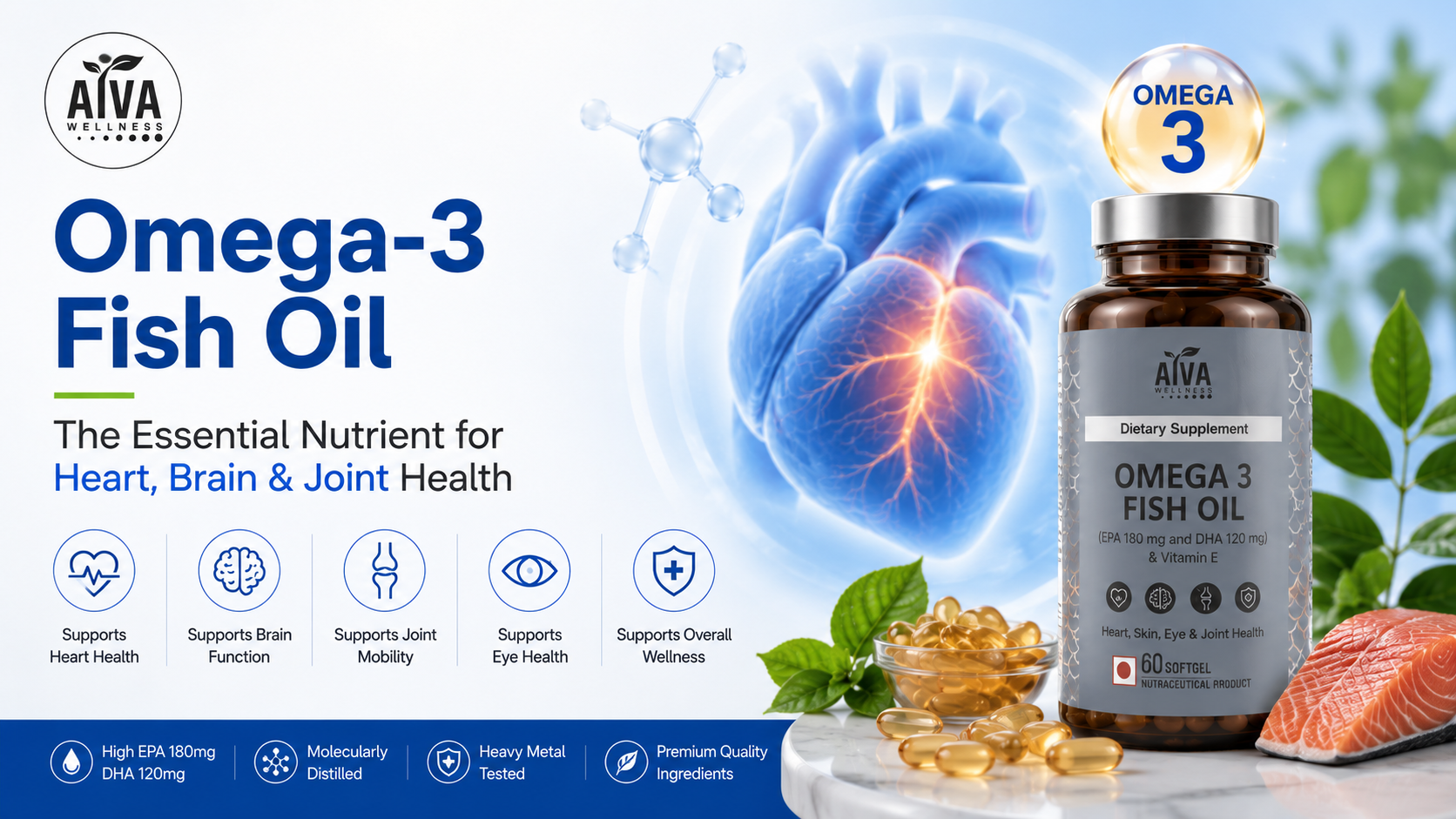
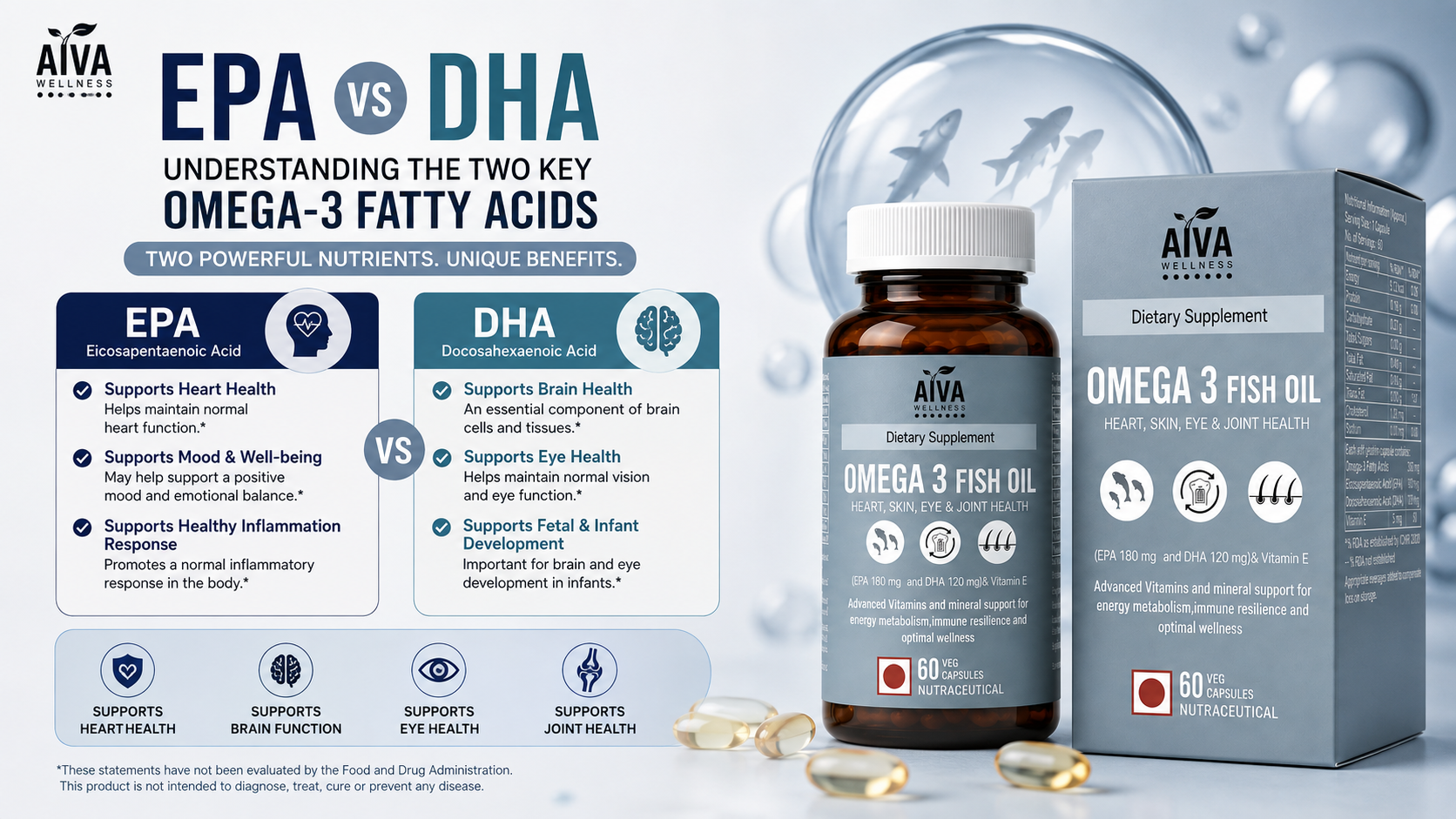
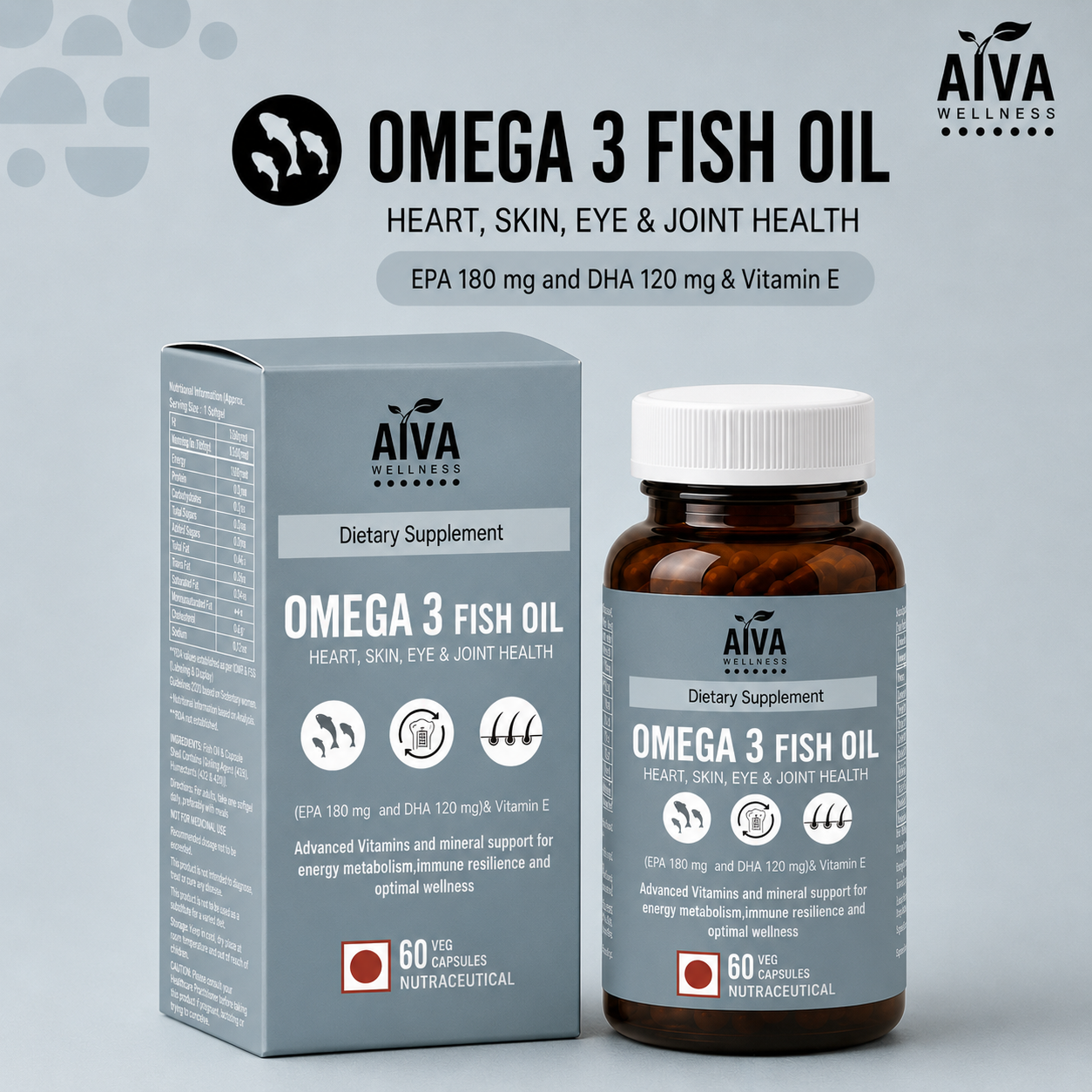
The single most useful thing to check on a fish oil label is the specific EPA and DHA content per serving — not just the total "fish oil" or "omega-3" figure. Two products can list the same total omega-3 weight but differ meaningfully in their actual EPA and DHA content. For a deeper look at what these two fatty acids are and how they differ, see our article on EPA vs DHA: understanding the two key omega-3 fatty acids.
Understand the Serving Size
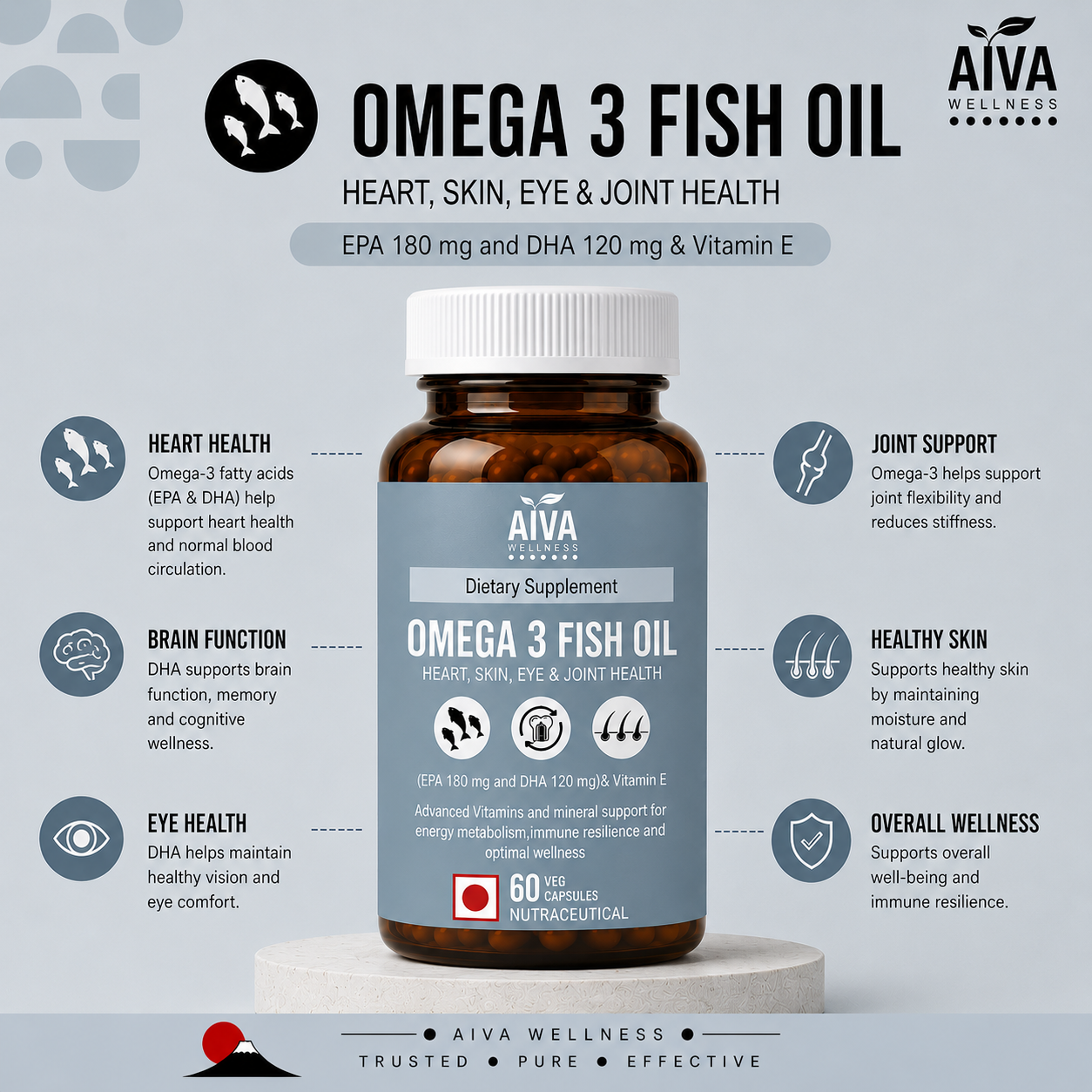
Check how many capsules make up one serving, and how many servings are in the container. According to the Aiva Wellness Omega-3 Fish Oil product specification, the labelled serving size is one capsule, with 60 capsules per container. Knowing this helps you calculate how long a bottle will actually last and compare value accurately across brands.
Sourcing & Quality Considerations
A few general quality indicators are worth looking for on any fish oil label:
- A transparent ingredients list — including the specific EPA and DHA amounts and any additional ingredients like Vitamin E, which is sometimes added as a stabiliser.
- Clear serving and dosage instructions — so you know exactly how the product is intended to be used.
- Manufacturer and packer information — transparency here is generally a good sign of a well-documented product.
- Allergen labelling — since fish oil is derived from fish, this matters for anyone with a fish or shellfish allergy.
Storage Considerations
Fish oil capsules are sensitive to heat, light, and air, all of which can cause the oil to oxidise over time. General good practice includes:
- Storing in a cool, dry place, away from direct sunlight.
- Keeping the container tightly closed when not in use.
- Refrigerating after opening, if recommended on the product label, to help preserve freshness.
This article is for general educational purposes and is not medical advice. This product is not intended to diagnose, treat, cure, or prevent any disease. Please consult your healthcare practitioner before use if you are pregnant, lactating, on blood-thinning medication, or managing an existing health condition.
General Safety Information
Fish oil is generally well tolerated by most people when taken as directed, though mild digestive effects such as a fishy aftertaste are sometimes reported. Anyone on blood-thinning medication, with a bleeding disorder, or with a known fish or shellfish allergy should speak with a doctor before starting a fish oil supplement.
Frequently Asked Questions
Check the specific EPA and DHA content per serving, not just the total fish oil or omega-3 weight, since these are the components most commonly referenced in research and product comparisons.
General good practice is to store fish oil in a cool, dry place away from direct sunlight, keep the container tightly closed, and refrigerate after opening if the label recommends it.
According to the product label, the container holds 60 capsules, with one capsule as the labelled serving size.
People on blood-thinning medication, with a bleeding disorder, or with a known fish or shellfish allergy should speak with a doctor before starting a fish oil supplement.
The Takeaway
Choosing a fish oil supplement comes down to a few practical checks: the actual EPA and DHA content, serving size, sourcing transparency, and proper storage. Beyond that, it's worth checking in with your doctor, especially if you're on medication.
Referenced Research & Sources
- National Institutes of Health, Office of Dietary Supplements — Omega-3 Fatty Acids Fact Sheet
- Aiva Wellness — Omega 3 Fish Oil product specification sheet
- U.S. FDA — Storage guidance for dietary supplements