What FU Actually Measures
Nattokinase is an enzyme, and enzymes are usually described by how active they are, not just by how much they weigh. That's why nattokinase supplements are labelled in Fibrinolytic Units (FU) alongside their milligram weight. FU reflects the enzyme's measured activity in a standardised laboratory assay — essentially, how much clot-dissolving work a given amount of the enzyme can perform under controlled conditions.
This is a useful distinction to understand before comparing products, because two capsules with different milligram weights can still deliver meaningfully different levels of enzyme activity. For nattokinase specifically, weight and FU tend to scale together in a predictable way, which is why you'll usually see both numbers quoted side by side on the label.
100mg vs 200mg: What's Different
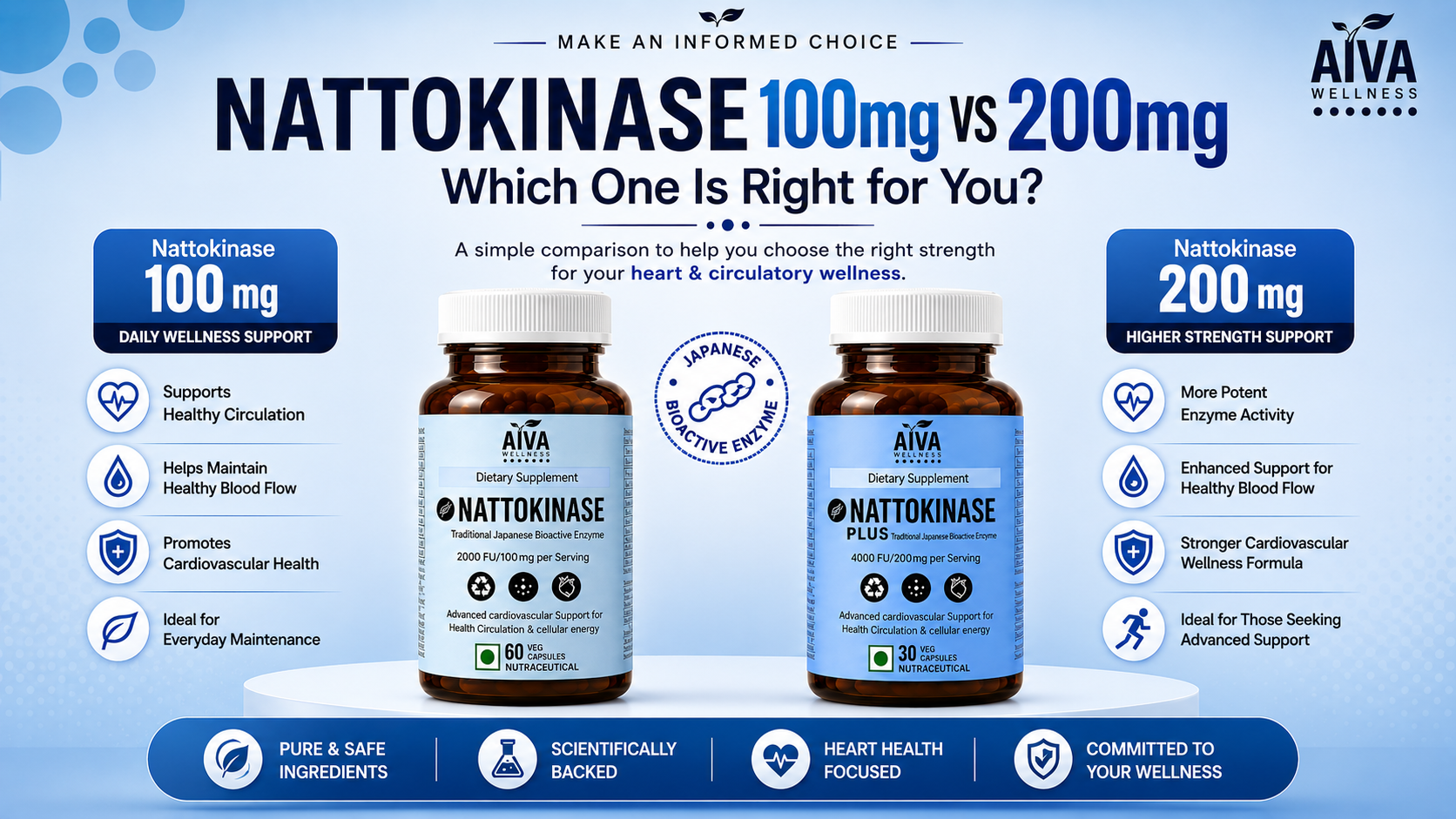
On the Aiva Wellness range, the difference between the two products is straightforward: the 200mg capsule delivers roughly double the fibrinolytic activity of the 100mg capsule in a single serving.
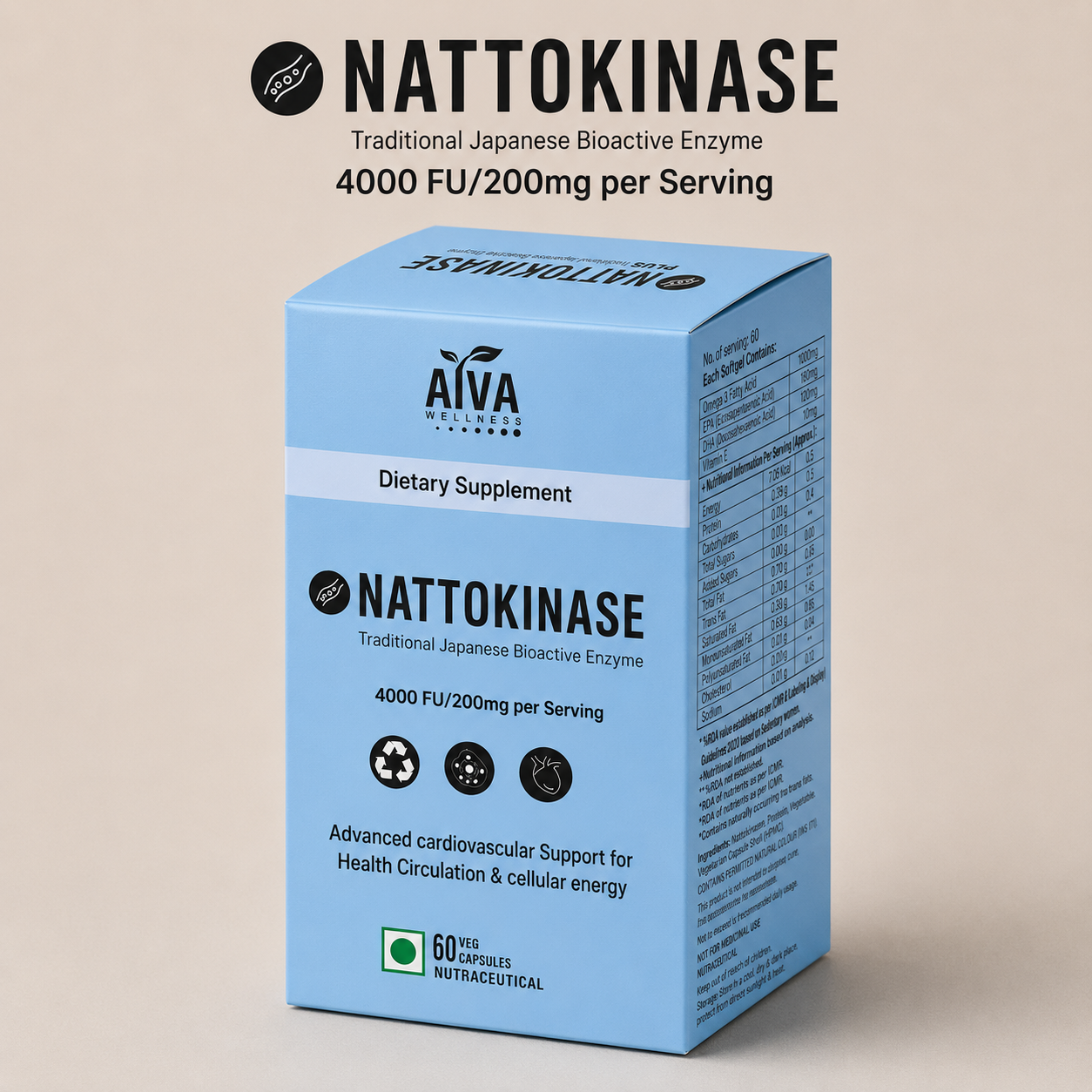
- Nattokinase 100mg — provides 2,000 FU per capsule, with 60 capsules per pack (roughly a two-month supply at one capsule daily).
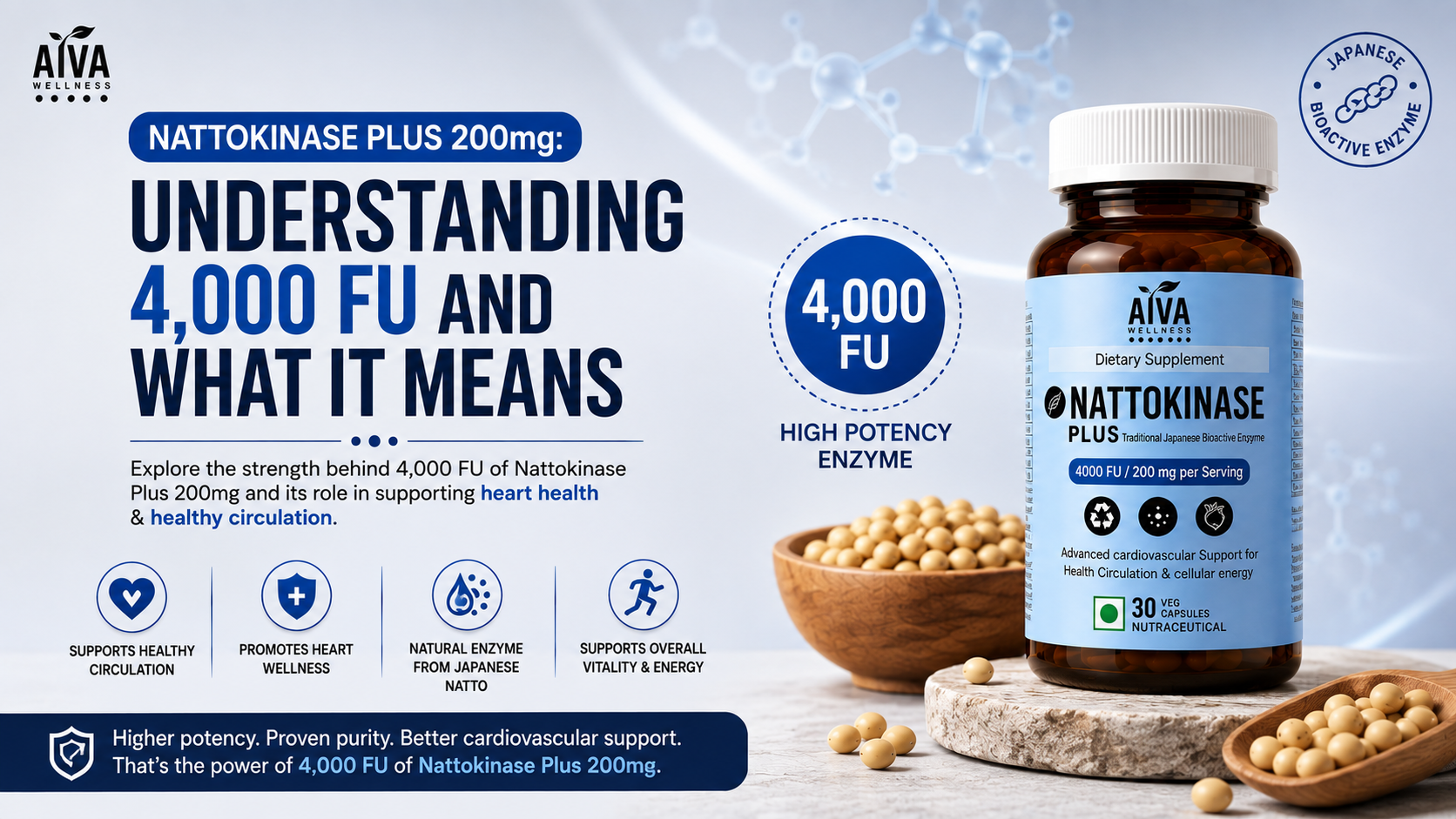
- Nattokinase Plus 200mg — provides 4,000 FU per capsule, with 30 capsules per pack (roughly a one-month supply at one capsule daily).
- Same source, same process — both are derived from fermented soybean (natto) via the same fermentation-based extraction, just standardised to different potencies.
Neither strength is universally "better" than the other — they are simply different concentrations of the same natural enzyme, and the more appropriate one depends on factors specific to you.
How to Read a Nattokinase Label
Whichever strength you're considering, a few label details are worth checking before you buy:
- Serving size and servings per container — so you know exactly how long a pack will last at the labelled serving.
- FU rating, not just milligrams — this tells you the enzyme's actual measured activity.
- Other ingredients — look for a short, transparent list of diluents, glazing agents, and capsule shell components, with nothing unexplained.
- Allergen information — nattokinase is derived from soy, so allergen labelling matters if you have a soy sensitivity.
Factors People Commonly Consider
We are not going to tell you which strength is right for you — that genuinely depends on your own health picture, and it's a conversation worth having with a doctor. That said, here are the kinds of factors people commonly weigh when they raise the topic with a healthcare professional:
- Existing routine — whether nattokinase is a new addition or one of several supplements already being taken.
- Capsule preference — some people prefer fewer, higher-potency capsules; others prefer to start at a lower potency.
- Medical history — including any blood-thinning medication, clotting disorders, or upcoming surgery.
This article is for general educational purposes and does not recommend a specific product or dosage for any individual. Nattokinase may interact with blood-thinning medication and is not suitable for everyone. Please consult your doctor before starting any new supplement, particularly if you are pregnant, breastfeeding, on medication, or managing an existing health condition, and always follow the dosage stated on the product label.
Safety Considerations for Both Strengths
Both the 100mg and 200mg products are manufactured using the same standardised process and carry the same general safety considerations. Nattokinase is typically taken on an empty stomach, since food can slow the enzyme's absorption. As with any fibrinolytic enzyme, anyone on anticoagulant or antiplatelet medication, with a bleeding or clotting disorder, or scheduled for surgery should speak with a doctor before use, regardless of the strength being considered.
If cardiovascular wellness is already on your radar, you may also find it useful to read our overview of what nattokinase is and where it comes from, or our deeper look at what 4,000 FU means on the Nattokinase Plus 200mg label.

Frequently Asked Questions
Not necessarily. The 200mg capsule simply delivers roughly double the fibrinolytic activity (4,000 FU vs 2,000 FU) of the 100mg capsule in one serving. Higher potency is not automatically the right fit for everyone, and the appropriate strength is best discussed with a doctor.
FU stands for Fibrinolytic Units, a measure of the enzyme's biological activity rather than its weight alone. It reflects how much clot-dissolving activity a given amount of nattokinase performs in a standardised laboratory assay.
Any change in supplement strength is worth discussing with a healthcare professional first, particularly for an enzyme supplement that can interact with blood-thinning medication.
The Aiva Wellness Nattokinase 100mg pack contains 60 capsules, while the Nattokinase Plus 200mg pack contains 30 capsules.
The Takeaway
Nattokinase 100mg and 200mg are two potencies of the same natural, fermentation-derived enzyme — the right one for you depends on your individual routine and health picture, not a universal rule. Read the FU rating, check the label carefully, and loop in your doctor before deciding which fits your daily wellness routine.
Referenced Research & Sources
- Wikipedia — Nattokinase
- Memorial Sloan Kettering Cancer Center — Nattokinase, About Herbs database
- Aiva Wellness — Nattokinase 100mg and Nattokinase Plus 200mg product specification sheets