What Vitamin D3 Is
Vitamin D3, also known as cholecalciferol, is one of two main forms of vitamin D (the other being D2, or ergocalciferol). It's a fat-soluble vitamin, meaning it's stored in the body's fat tissue rather than being water-soluble and readily excreted. Unlike most vitamins, the body can actually produce vitamin D3 on its own, when skin is exposed to UVB rays from sunlight.
Vitamin D3's General Role in the Body
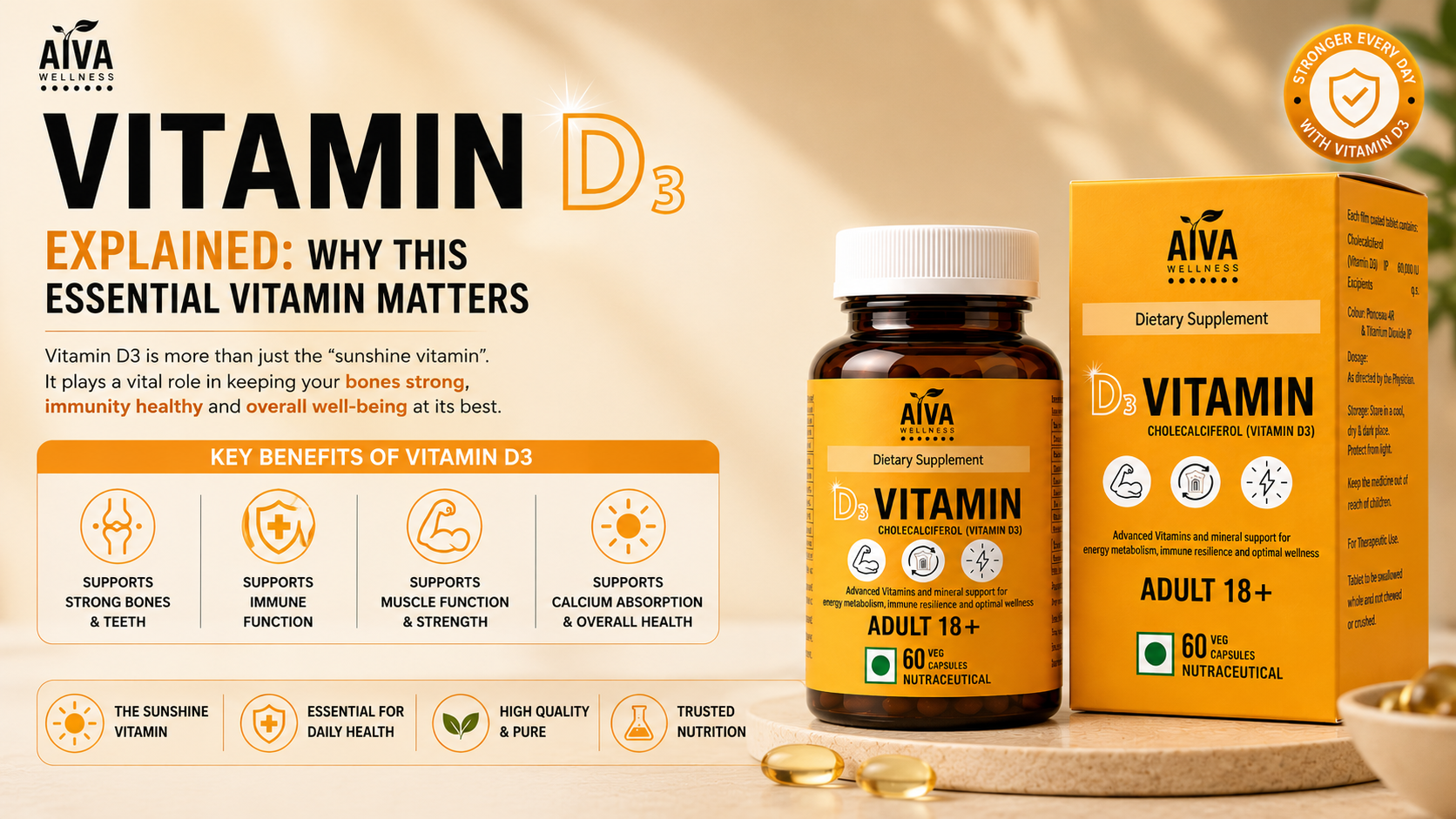
Vitamin D3 is commonly discussed for its role in:
- Bone and muscle health — Vitamin D helps the body absorb calcium, which is essential for normal bone structure.
- Immune resilience — Vitamin D is involved in normal immune system function.
- Energy metabolism — Vitamin D plays a role in how the body processes energy.
Sources: Sunlight, Food, and Supplements
Vitamin D3 comes from three main sources:
- Sunlight — the body's primary natural source, produced when skin is exposed to UVB rays.
- Food — including oily fish, egg yolks, and fortified foods like milk and cereals.
- Supplements — ranging from lower-dose daily maintenance products to higher-dose, doctor-directed therapeutic formats.
Why Vitamin D Deficiency Is Common
Vitamin D deficiency is widely reported globally, including in India, despite abundant sunlight in many regions. Factors like indoor lifestyles, sunscreen use, darker skin pigmentation (which reduces UVB-driven synthesis), and limited dietary sources all contribute to this. Because of how widespread low levels are, vitamin D is one of the more commonly tested and supplemented nutrients, often after a blood test confirms a deficiency.
This article is for general educational purposes and is not medical advice, and does not diagnose or treat any condition. Vitamin D3 is fat-soluble and can accumulate in the body, so high-dose products should only be used under medical guidance. Please consult your doctor before starting any vitamin D supplement, and have your levels checked where appropriate.
About the Aiva Wellness 60,000 IU Tablet
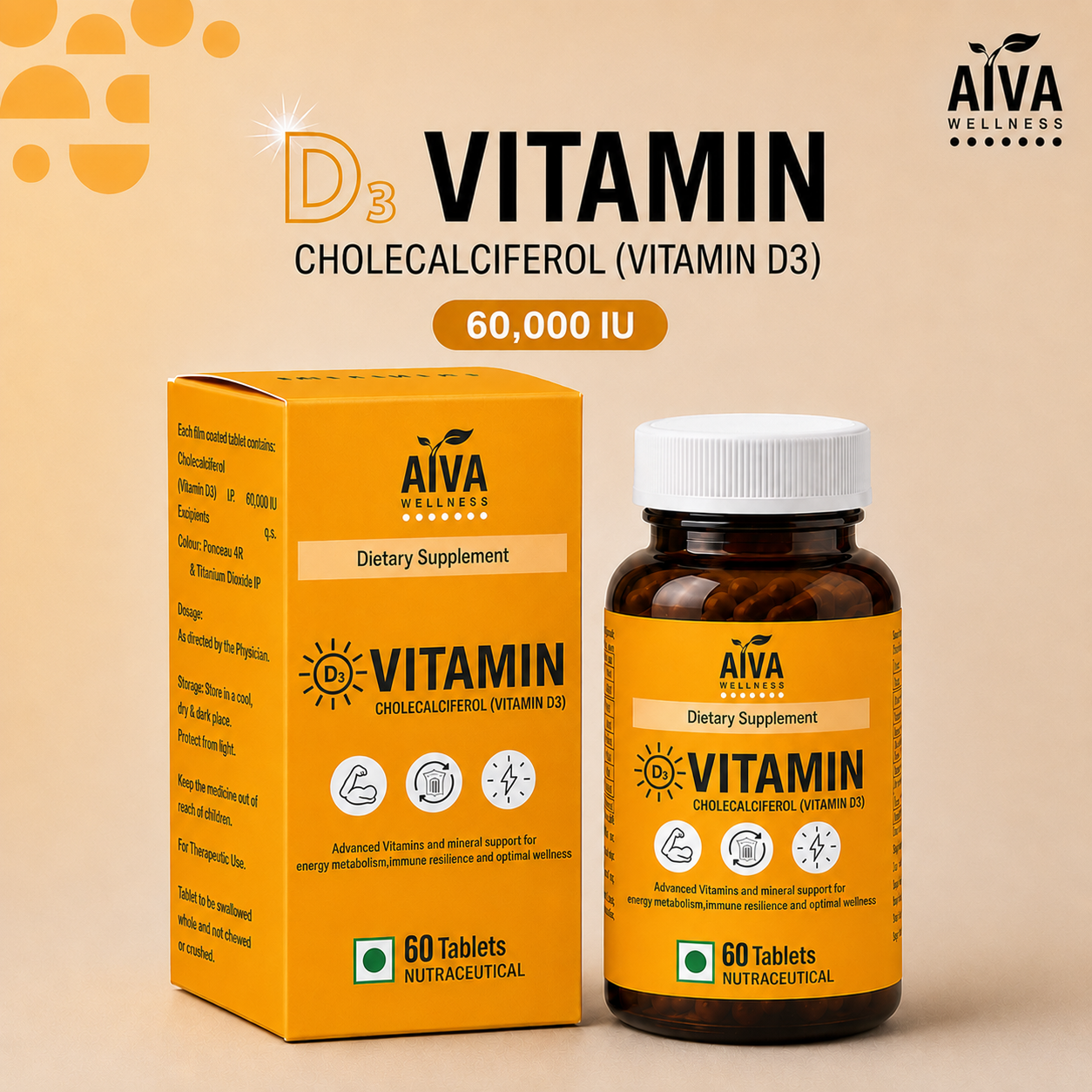
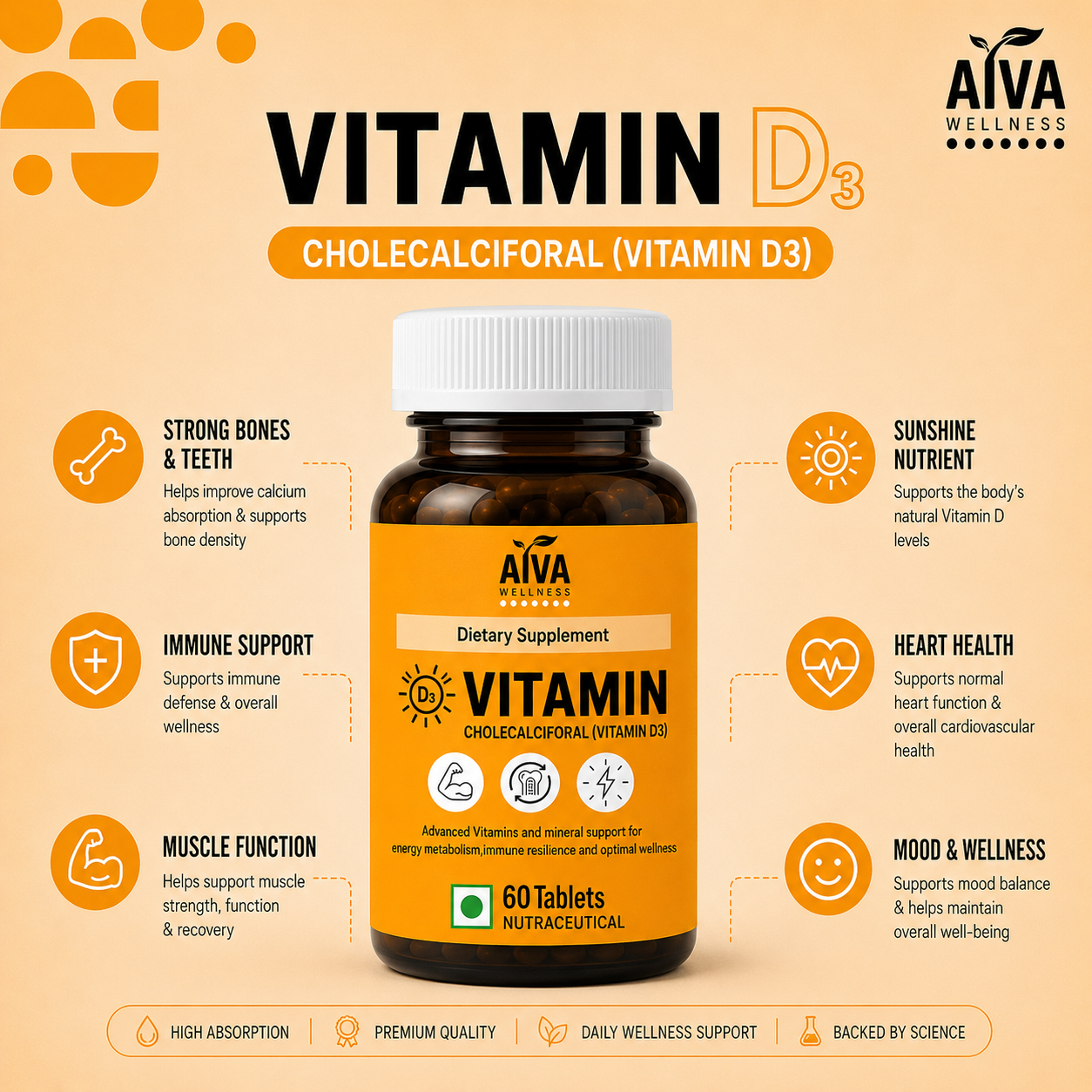
It's worth being clear about what kind of product this is. According to the Aiva Wellness product specification, Vitamin D3 (Cholecalciferol IP) 60,000 IU is a therapeutic-use product intended for adults 18+, formulated as a film-coated tablet, and is to be taken strictly as directed by a Registered Medical Practitioner. This is a substantially higher dose than typical daily maintenance vitamin D products, and it is not meant to be taken casually or without medical supervision — usage, frequency, and duration should be determined by a doctor, often based on a blood test result.
If you're interested in how vitamin D specifically relates to bone health, our companion article on Vitamin D3 and bone health goes into more detail on that relationship.
Frequently Asked Questions
Vitamin D3 (cholecalciferol) is one of two main forms of vitamin D, the other being D2 (ergocalciferol). D3 is the form the body produces naturally from sunlight exposure.
No. According to the product label, this is a therapeutic-use product intended to be taken strictly as directed by a Registered Medical Practitioner, not as a casual daily supplement.
Indoor lifestyles, sunscreen use, skin pigmentation, and limited dietary sources all reduce natural vitamin D synthesis, which is why deficiency is widely reported even in regions with abundant sunlight.
Oily fish, egg yolks, and fortified foods such as milk and cereals are among the food sources of vitamin D, though sunlight remains the primary natural source for most people.
The Takeaway
Vitamin D3 plays a wide-ranging role in bone health, immune function, and energy metabolism, and can come from sunlight, food, or supplements. The Aiva Wellness 60,000 IU tablet is a higher-dose, therapeutic-use product meant to be taken strictly under a doctor's direction — not a casual daily vitamin.
Referenced Research & Sources
- National Institutes of Health, Office of Dietary Supplements — Vitamin D Fact Sheet
- Aiva Wellness — Vitamin D3 60,000 IU product specification sheet
- Indian Journal of Endocrinology and Metabolism — Vitamin D status in India