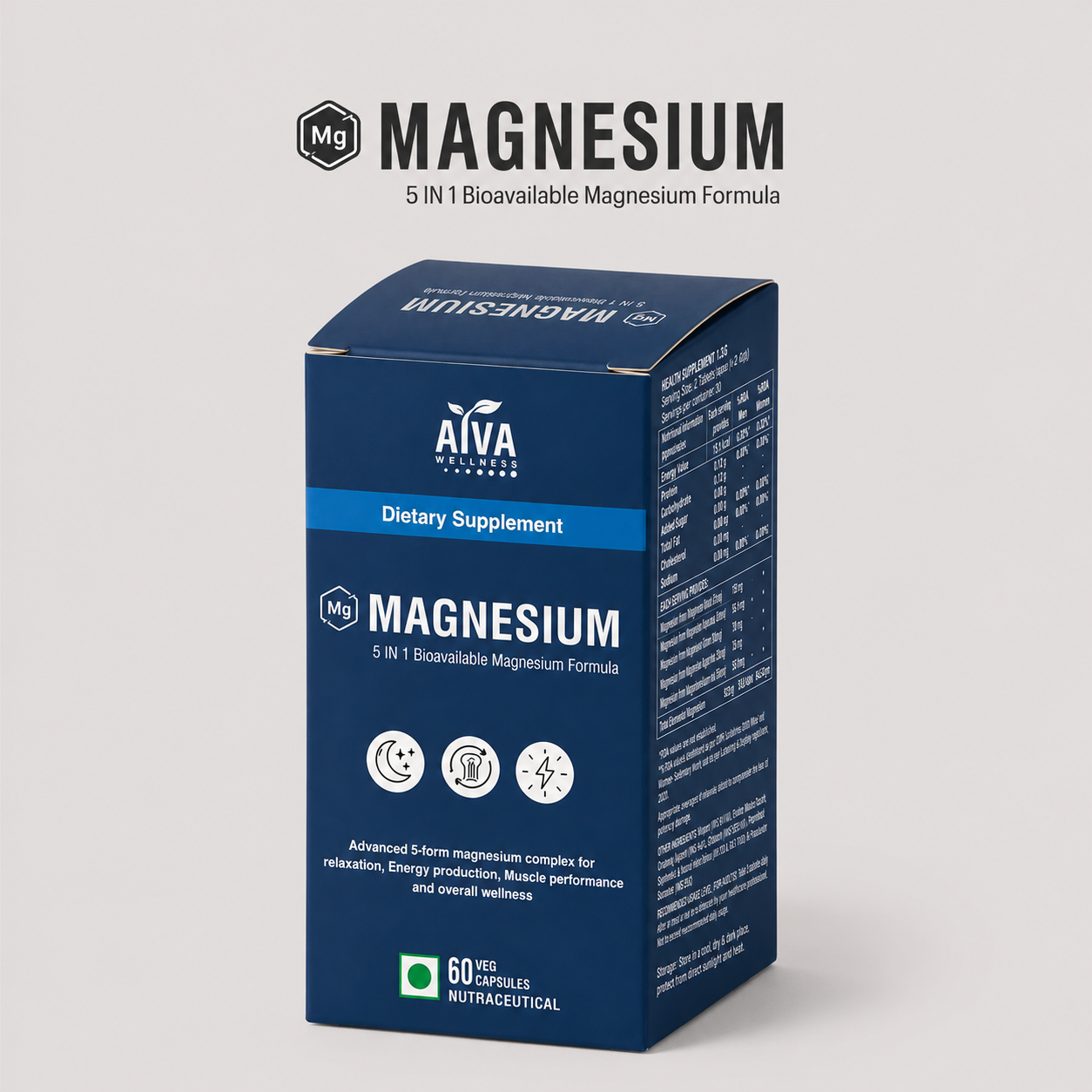
Why Magnesium Matters So Much
Magnesium is involved in more than 300 enzymatic reactions in the human body — from converting food into energy, to building protein and DNA, to regulating muscle and nerve function. It also plays a direct role in keeping heartbeat rhythm steady and blood pressure within a healthy range.
Despite this outsized role, magnesium is one of the nutrients most adults fall short on. Research from the U.S. Office of Dietary Supplements notes that magnesium inadequacy is widespread, and the shortfall tends to build quietly over months or years rather than appearing overnight — the kidneys are efficient at conserving what little magnesium is available, which can mask a deficiency until it becomes more pronounced.
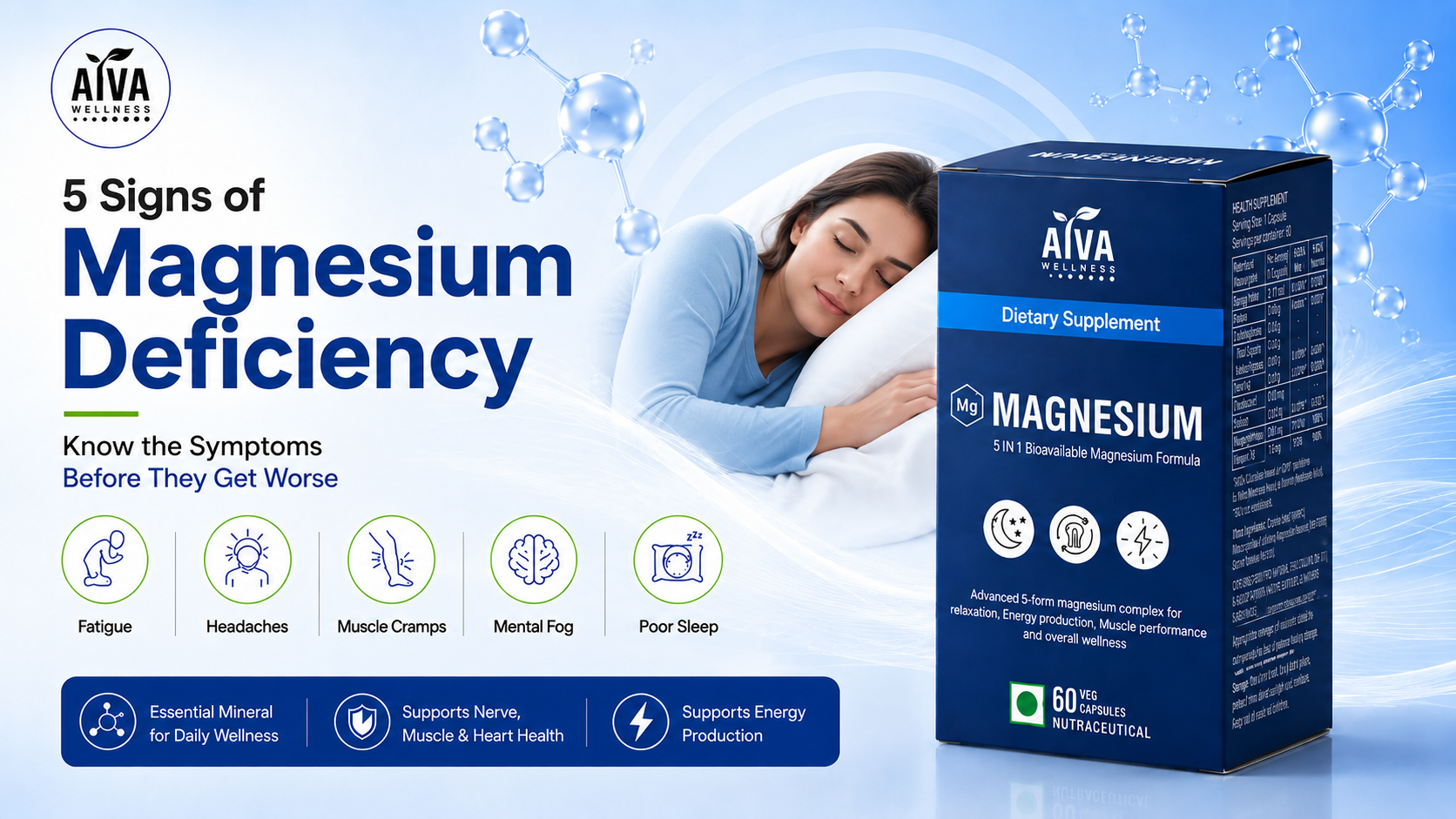
5 Signs You May Be Magnesium Deficient
Because magnesium touches so many body systems, its deficiency signs can look like ordinary tiredness or stress at first. Here are five signs worth paying attention to:
- Fatigue and low energy — magnesium is a cofactor in energy production, so persistent tiredness and weakness are often among the earliest signs.
- Muscle cramps, twitches, or tremors — magnesium helps muscles relax after contracting, so a shortage can show up as cramping, involuntary twitches, or restless legs.
- Poor sleep or restlessness — magnesium supports the nervous system pathways involved in relaxation, and low levels are commonly linked with lighter, more disrupted sleep.
- Numbness, tingling, or heart palpitations — more pronounced deficiency can affect nerve signalling and heart rhythm, both of which depend on balanced magnesium levels.
- Low appetite, nausea, or irritability — early deficiency is also associated with loss of appetite, mild nausea, and mood changes such as increased irritability or anxiety.
"Magnesium deficiency rarely announces itself loudly — it shows up as the cramp you shrug off, the sleep that never feels quite deep enough, the tiredness you chalk up to a busy week."
Why Magnesium Deficiency Is So Common
It may seem surprising that a nutrient this essential is so often under-consumed, but several everyday factors contribute to the gap:
The takeaway is straightforward: even people who eat what feels like a "normal" diet can end up with a meaningful magnesium gap, simply due to modern food processing and everyday lifestyle factors.
How Much Magnesium You Actually Need
Magnesium requirements vary by age and sex. As a general reference for adults:
- Adult men: approximately 400-420 mg per day.
- Adult women: approximately 310-320 mg per day.
- Food sources: nuts, seeds, legumes, whole grains, and leafy green vegetables are the richest natural sources.
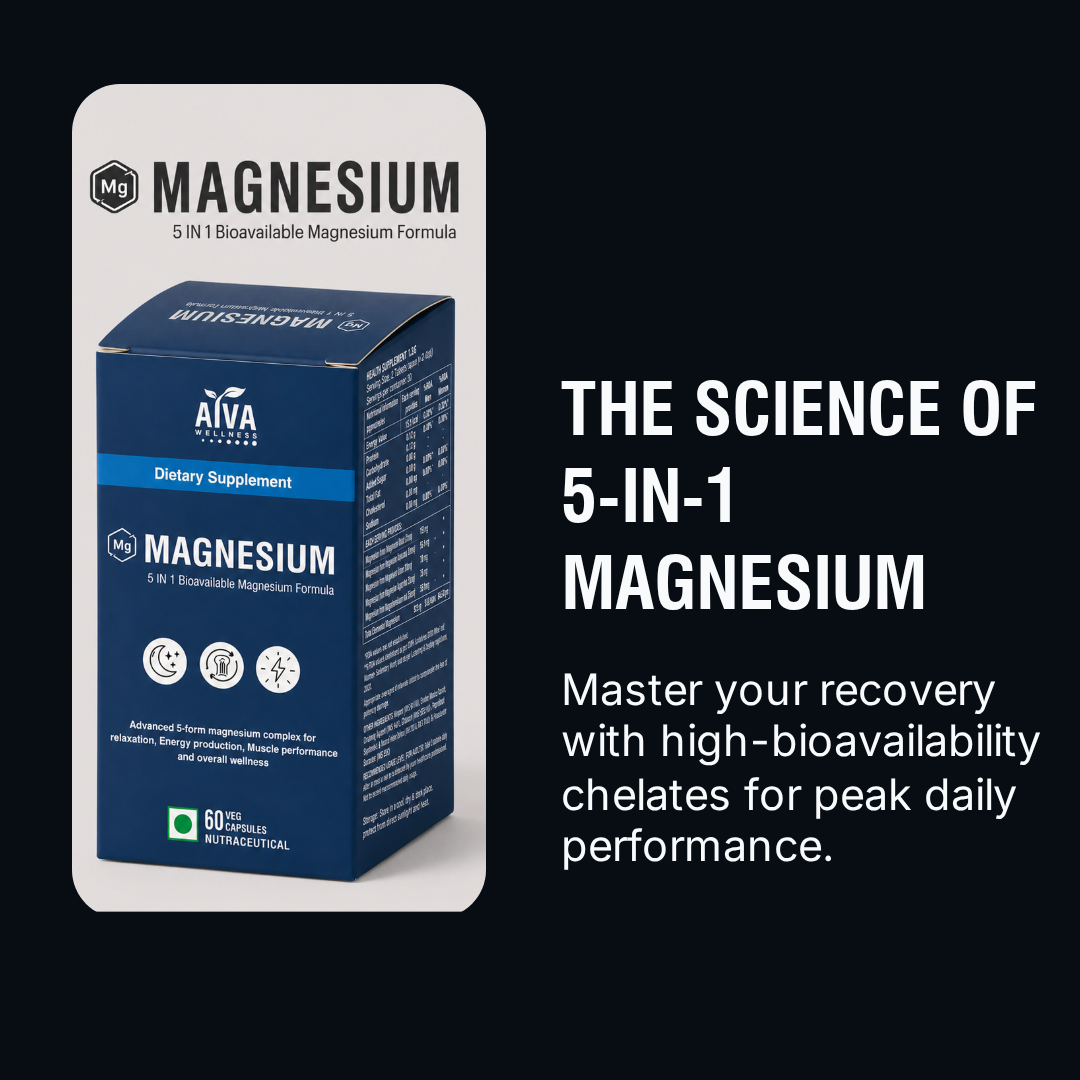
Where diet alone doesn't close the gap, a well-formulated supplement can help — and the form matters. Different magnesium salts are absorbed differently: citrate is well absorbed but can have a laxative effect at higher doses, glycinate is gentler on digestion and often chosen to support relaxation and sleep, and oxide provides a high amount of elemental magnesium but is less bioavailable on its own. A blended, multi-form complex is designed to draw on the strengths of several forms at once.
This article is for general educational purposes and is not medical advice. High-dose magnesium supplements are not suitable for everyone, particularly people with kidney disease or those taking certain medications, since excess magnesium is normally cleared by the kidneys. Please consult your doctor before starting any new supplement, especially if you are pregnant, breastfeeding, on medication, or managing an existing health condition. Always follow the dosage on the product label.
Choosing a Quality Magnesium Supplement
Not all magnesium supplements are created equal. When choosing one, look for:
- Multiple bioavailable forms — a blend such as glycinate, citrate, malate, and oxide can help balance absorption, tolerability, and elemental magnesium content in one capsule.
- No unnecessary fillers or binders — a clean formula means more room for the active ingredient that matters.
- Third-party tested manufacturing — for purity, safety, and batch-to-batch consistency.
- Clear labelling of elemental magnesium — so you can compare the actual active dose against the RDA rather than just the total compound weight.
Frequently Asked Questions
Early signs often include fatigue, low appetite, mild nausea, and general weakness. As deficiency progresses, muscle cramps, tingling, poor sleep, and heart palpitations can appear. Symptoms are often subtle, which is why they're easy to overlook.
Roughly 400-420 mg/day for adult men and 310-320 mg/day for adult women, counting both food and supplements. Needs can shift slightly with age and life stage.
Refined grains and processed foods contain far less magnesium than their whole-food counterparts. Stress, high caffeine or alcohol intake, and certain medications can also increase how much magnesium the body loses.
Citrate is well absorbed but can have a laxative effect at higher doses. Glycinate is gentler on digestion and often preferred for sleep and relaxation support. A multi-form complex combines several types in one formula.
The Takeaway
Magnesium deficiency is common, often subtle, and easy to mistake for everyday tiredness or stress. Paying attention to signs like persistent fatigue, muscle cramps, and restless sleep — and pairing a magnesium-rich diet with a quality supplement when needed — is a simple, evidence-informed way to support this essential mineral's many roles in the body.
Referenced Research & Sources
- National Institutes of Health, Office of Dietary Supplements — Magnesium: Health Professional Fact Sheet
- National Institutes of Health, Office of Dietary Supplements — Magnesium: Consumer Fact Sheet
- Ohio State Health & Discovery — Magnesium: Are You Getting Enough?
- Healthline — Magnesium Deficiency: Symptoms, Causes & More