What Exactly Is Omega-3 Fish Oil?
Omega-3s are a family of polyunsaturated fats that the human body needs but cannot produce on its own. Fish oil is one of the richest natural sources of two of the most studied omega-3s: EPA (eicosapentaenoic acid) and DHA (docosahexaenoic acid). A third type, ALA (alpha-linolenic acid), comes from plant sources like flaxseed and walnuts, but the body converts only a small fraction of ALA into EPA and DHA — which is why fish-derived omega-3s are considered the more direct source.
Fatty fish such as salmon, mackerel, sardines, and trout naturally contain EPA and DHA, along with shellfish like mussels and oysters. Fish oil supplements concentrate these fatty acids into a convenient daily capsule, which is useful for anyone who doesn't regularly eat fish two or more times a week.
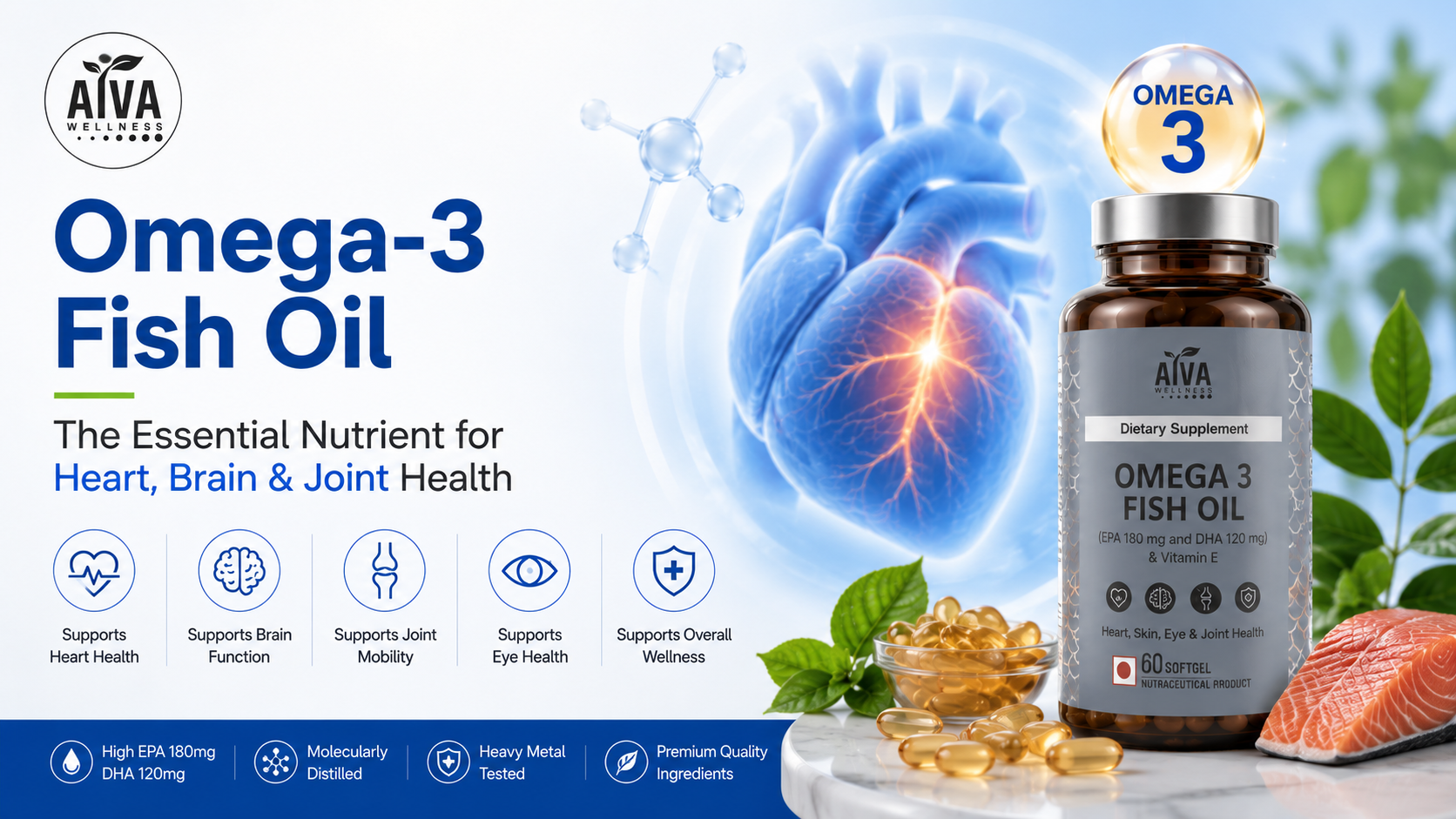
How Omega-3 Supports Heart, Brain & Joints
Omega-3 fatty acids are structurally built into cell membranes throughout the body, which is part of why their influence spans so many systems at once — most notably the heart, the brain, and the joints.
- Heart health — EPA and DHA are well known for supporting healthy triglyceride levels, a key factor in cardiovascular wellness, and are recommended by health bodies such as the American Heart Association as part of a heart-conscious lifestyle.
- Brain health — DHA is a major structural component of brain tissue and plays an important role in brain development and maintenance across the lifespan, which is why it's linked to mental clarity and cognitive wellbeing.
- Joint comfort — omega-3s help the body produce specialised compounds involved in regulating the body's natural inflammatory response, which is one reason they're often discussed alongside joint comfort and mobility.
- Naturally derived — sourced from fish, with a long history of dietary use in populations known for strong cardiovascular health.
"You can't out-supplement a poor diet, but omega-3s are one of the few nutrients where the science consistently points the same direction — heart, brain, and joints all benefit from getting enough."
What the Research Shows
Omega-3 fish oil is one of the most researched supplements in the world, though — as with most nutrition science — results vary depending on the population studied and the dose used. Here's a balanced look at where the evidence currently stands:
In short: the most consistent evidence supports omega-3's role in maintaining healthy triglyceride levels, while findings on broader cardiovascular event prevention in generally healthy people are more mixed. Eating fatty fish regularly remains one of the most reliably supported dietary patterns for cardiovascular wellness.
How Much Omega-3 You Need
There's no single official RDA for EPA and DHA, but several expert bodies offer useful reference points. For general health, a combined 250-500 mg of EPA and DHA per day is commonly cited as sufficient for most healthy adults. People focused on specific goals, such as supporting already-elevated triglycerides, may see research using higher amounts — generally under a doctor's guidance.
Since a typical fish oil softgel provides around 300 mg of combined EPA and DHA, checking the label for the actual EPA/DHA content — not just the total fish oil weight — is the most useful way to compare products and doses.
This article is for general educational purposes and is not medical advice. Fish oil can have a mild blood-thinning effect at higher doses and may interact with blood-thinning medications. Please consult your doctor before starting any new supplement, particularly if you are pregnant, breastfeeding, on medication, or managing an existing health condition. Always follow the dosage on the product label.
Choosing a Quality Omega-3 Supplement
Not all fish oil capsules are created equal. When choosing a supplement, look for:
- Clear EPA and DHA content — so you know exactly how much of the active fatty acids you're getting per serving, not just the total fish oil weight.
- Purity and freshness testing — for heavy metals, oxidation, and rancidity, since fish oil can degrade over time.
- Third-party tested manufacturing — for purity, safety, and consistency batch after batch.
- Sustainable sourcing — transparent brands disclose where their fish oil is sourced and how it's processed.

Frequently Asked Questions
EPA supports a healthy inflammatory response and mood balance, while DHA is a key structural component of the brain and retina. Most quality fish oil supplements provide a blend of both.
For general wellness, around 250-500 mg of combined EPA and DHA per day is a commonly cited reference point. Always follow your product label and a doctor's guidance for your own situation.
Evidence is strongest for supporting healthy triglyceride levels. Findings on broader cardiovascular event prevention in healthy adults are more mixed, so fish oil is best viewed as a complement to a heart-healthy diet, not a replacement.
Mild digestive upset, burping, or a fishy aftertaste are the most common. At high doses, fish oil can have a mild blood-thinning effect, so check with your doctor if you're on blood thinners or have surgery scheduled.
The Takeaway
Omega-3 fish oil remains one of the most consistently studied nutrients for heart, brain, and joint health. While it isn't a substitute for a balanced diet, it's a well-supported way to help close the gap for anyone who doesn't regularly eat fatty fish — and a conversation worth having with your doctor if cardiovascular or cognitive wellness is on your radar.
Referenced Research & Sources
- National Institutes of Health, Office of Dietary Supplements — Omega-3 Fatty Acids: Health Professional Fact Sheet
- American Heart Association — Are You Getting Enough Omega-3 Fatty Acids?
- Harvard Health Publishing — Omega-3 Fatty Acids and the Heart: New Evidence, More Questions
- Mayo Clinic — Fish Oil